



Every successful business starts with an idea, but not every idea becomes a successful business. The difference lies in structure. An idea is only the starting point. A structured business model is what turns that idea into something real, scalable, and sustainable. Many people have good ideas, but without validation, planning, and execution, those ideas often remain concepts rather than companies.
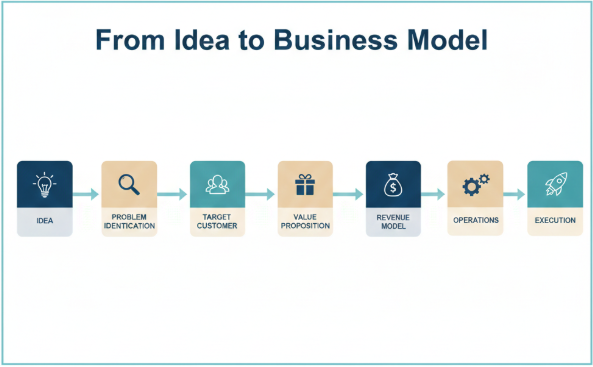
Turning an idea into a structured business model means transforming inspiration into a clear system that explains how value is created, delivered, and captured. This process requires understanding the market, the customer, the problem being solved, and the way the business will operate and grow over time. This article explains that journey in a simple and practical way, showing how ideas evolve into well-designed business models that can succeed in the real world.
Understanding the Difference Between an Idea and a Business Model
An idea is a thought, a vision, or a solution to a problem. It often starts as a sentence like “What if we could…” or “There should be a better way to…”. While ideas are important, they are incomplete. They do not explain how money will be made, how customers will be reached, or how the business will survive competition.
A business model, on the other hand, is a structured explanation of how a business works. It shows who the customers are, what value they receive, how the product or service is delivered, and how revenue is generated. It also explains costs, operations, and long-term sustainability. Two people can have the same idea, but the one with the better business model is far more likely to succeed.
Why Most Business Ideas Fail
Most business ideas fail not because they are bad ideas, but because they are poorly structured. Many founders fall in love with their ideas and skip validation. They assume customers will come simply because the product exists. Others underestimate costs, overestimate demand, or fail to adapt when reality does not match expectations.
Another common reason for failure is solving a problem that is not urgent or important enough. If customers do not strongly feel the problem, they will not pay for a solution. Some ideas also fail because the market is too small, too competitive, or already dominated by stronger players. Without a structured business model, these risks remain hidden until it is too late.
From Inspiration to Opportunity Validating the Idea
Before building a business, an idea must be tested. Validation helps confirm whether the idea solves a real problem for real people. This step saves time, money, and effort by reducing uncertainty early in the process.
Identifying a Real Problem Worth Solving
Strong businesses are built around real problems, not assumptions. A real problem is one that people experience often, find frustrating, and are willing to pay to solve. Observing daily life, industries, or inefficiencies can reveal such problems. When a problem affects many people or businesses and has no good solution, it becomes an opportunity.
Defining Your Target Customer Clearly
A business cannot serve everyone. Defining a specific target customer helps focus the business model. This includes understanding who the customer is, what they need, how they behave, and why they would choose one solution over another. A clear customer profile leads to better products, clearer messaging, and stronger results.
Market Research Understanding the Competitive Landscape
Market research transforms assumptions into informed decisions. It helps entrepreneurs understand demand, competition, and trends that affect the business.
Industry Trends and Market Demand
A good idea must exist in the right market at the right time. Market research shows whether demand is growing, stable, or declining. Trends such as technology adoption, regulation, and consumer behavior can either support or weaken a business model. Understanding these trends helps align the idea with real market conditions.
Competitive Analysis: Learning From Others
Competition is not something to fear; it is something to learn from. Studying competitors reveals what already works and what does not. It also highlights gaps in the market where a new business can stand out. A strong business model does not copy competitors blindly but positions itself differently by offering unique value.
Designing a Structured Business Model
Once validation and research are complete, the next step is structure. Designing a business model means organizing all moving parts into a clear system that supports growth and sustainability.
Value Proposition What Makes the Idea Valuable
The value proposition explains why customers should care. It clearly states the problem, the solution, and the benefit. A strong value proposition focuses on outcomes, not features. It explains how the customer’s life or work becomes easier, faster, cheaper, or better.
Revenue Model: How the Business Makes Money
A business model must clearly explain how revenue is generated. This could be through product sales, subscriptions, licensing, services, or usage-based pricing. The key is sustainability. Revenue should be predictable, scalable, and aligned with customer value. A strong revenue model supports long-term growth rather than short-term gains.
Cost Structure and Key Resources
Every business has costs. These include production, marketing, technology, people, and operations. Understanding costs early helps avoid financial surprises later. Key resources such as skills, tools, technology, and partnerships must also be identified because they enable the business to function effectively.
Key Activities and Partnerships
Key activities are the most important actions the business must perform to deliver value. Partnerships can reduce costs, increase reach, or improve efficiency. A well-structured business model identifies what must be done internally and what can be supported through collaboration.
Turning the Business Model Into a Business Plan
A business model explains how the business works, while a business plan explains how it will be executed. The business plan turns structure into strategy and direction.
Writing a Clear Business Description
The business description summarizes what the company does, who it serves, and why it exists. It should be simple, clear, and easy to understand. This section is often the first impression for investors, partners, and stakeholders.
Marketing and Sales Strategy
A great product without customers will fail. The marketing and sales strategy explains how customers will be reached, informed, and converted. This includes messaging, channels, pricing strategy, and customer relationships. Clear communication builds trust and drives growth.
Financial Planning and Projections
Financial planning provides a realistic view of the business’s future. It includes expected revenue, costs, and cash flow. While projections are estimates, they help founders prepare for challenges and make better decisions. Clear financial thinking adds discipline to creativity.
Execution Turning Strategy Into Action
Execution is where ideas are tested in the real world. It is the phase where learning happens fastest.
Building, Testing, and Iterating
Successful businesses rarely get everything right the first time. Launching early versions, collecting feedback, and improving continuously is essential. Iteration allows the business to adapt to customer needs and market changes.
Measuring Performance and Learning
Tracking progress helps determine what is working and what is not. Customer feedback, sales data, and operational performance provide insights that guide improvement. Learning from results strengthens the business model over time.
Case Studies Ideas That Became Scalable Business Models
Real-world examples show how structured thinking leads to success.
Amazon From Online Bookstore to Global Platform
Amazon started as a simple idea to sell books online. Its success came from a structured business model focused on customer experience, logistics, and scalability. Over time, Amazon expanded its model while maintaining its core value proposition.
Netflix Adapting the Business Model Over Time
Netflix began as a DVD rental service but adapted its business model as technology changed. By shifting to streaming and original content, Netflix demonstrated how flexibility and structure support long-term success.
Zappos: Building a Business Around Customer Experience
Zappos focused on customer service as its main value proposition. Its structured approach to culture, service, and operations turned a simple idea into a strong brand.
The Entrepreneurial Mindset Behind Structured Thinking
A strong business model requires the right mindset. Entrepreneurs must think in systems rather than isolated ideas. They must be willing to learn, adapt, and improve continuously.
Thinking in Systems, Not Ideas
Successful founders understand how different parts of the business connect. Decisions in marketing affect operations, and pricing affects customer perception. System thinking leads to better strategy.
Embracing Change and Uncertainty
Markets evolve, customers change, and technology advances. A flexible mindset allows businesses to adjust their models without losing direction.
Common Mistakes to Avoid When Structuring a Business Model
Many entrepreneurs overcomplicate planning or delay execution. Others ignore customer feedback or scale too early. Avoiding these mistakes requires balance between planning and action, creativity and discipline.
Turning a Business Model Into a Practical Roadmap
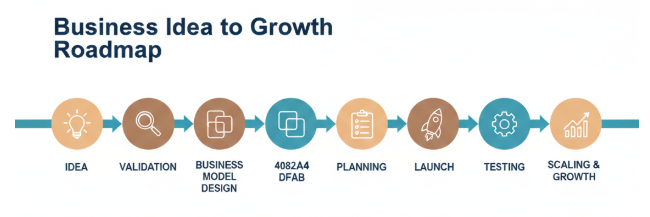
A business model becomes powerful when translated into action. Clear priorities, milestones, and timelines help move the business forward step by step. This roadmap keeps the idea focused and measurable.
Frequently Asked Questions (FAQs)
What does it mean to turn an idea into a structured business model?
Turning an idea into a structured business model means clearly defining how the idea will create value, who it will serve, how it will make money, and how the business will operate and grow. It transforms a concept into a practical and sustainable system.
Why is a business model important before starting a business?
A business model helps reduce risk by clarifying costs, revenue sources, customers, and operations before investing time and money. It provides direction and helps founders make better decisions from the start.
Can a good idea fail without a strong business model?
Yes, many good ideas fail because they lack structure. Without a clear business model, it becomes difficult to attract customers, manage costs, compete effectively, or scale the business over time.
How do I know if my idea is worth turning into a business?
An idea is worth developing if it solves a real problem, has clear demand, targets a specific audience, and can generate sustainable revenue. Market research and customer feedback are key to validating this.
What is the difference between a business model and a business plan?
A business model explains how the business works, while a business plan explains how it will be executed. The business model focuses on structure and value creation, and the business plan focuses on strategy, goals, and implementation.
Do I need a lot of money to create a structured business model?
No, creating a structured business model mainly requires research, planning, and clear thinking. Many successful businesses started with limited resources but strong structure and validation.
Can a business model change over time?
Yes, business models often evolve as markets, customers, and technologies change. Successful businesses regularly review and adapt their models to stay relevant and competitive.
Conclusion From Idea to Impact
Turning an idea into a structured business model is a journey that requires clarity, research, discipline, and execution. Ideas spark inspiration, but structure creates results. By validating assumptions, understanding the market, designing a clear business model, and executing with focus, entrepreneurs can transform simple ideas into sustainable businesses.
A structured business model does not limit creativity; it strengthens it. It provides direction, reduces risk, and increases the chances of long-term success. With the right approach, any idea can evolve into meaningful impact.