



today’s competitive service industry, improving profitability isn’t just about increasing revenue it’s about working smarter, optimizing resources, and delivering higher value to your clients. Service businesses face unique challenges, such as labor-intensive operations, variable costs, and the constant need to balance quality with efficiency.
This guide provides actionable tactics to help service business owners and managers increase profits, streamline operations, and maximize client value. Whether you run a consulting firm, a cleaning service, a marketing agency, or any client-focused business, these strategies are practical, measurable, and immediately implementable.
Understanding Profit in Service Businesses
Profitability in service businesses goes beyond the simple difference between revenue and expenses it’s about understanding the drivers of value.
Revenue Streams
Service businesses typically earn revenue through:
- Hourly billing or project fees
- Retainer or subscription-based services
- Up selling additional services or add-ons
Cost Structures
Unlike product-based businesses, service firms face:
- Fixed Costs Rent, software subscriptions, salaries
- Variable Costs Labor hours, outsourced work, consumables
Key Performance Indicators (KPIs)
Tracking these KPIs helps identify opportunities for profit improvement:
- Gross Margin Revenue minus direct service costs
- Net Margin Overall profitability after all expenses
- Client Retention Rate Repeat business directly impacts long-term profitability
Why Profit Improvement Matters
Profit improvement isn’t just about money it impacts sustainable growth, reinvestment, and team morale.
- Sustainable Growth More profit allows you to invest in marketing, technology, and hiring.
- Employee Satisfaction Efficient processes reduce stress and improve productivity.
- Competitive Advantage Higher profitability enables service innovation and better client experiences.
Example Agencies that systematically track profitability and streamline operations have reported up to a 20% improvement in net margins within a year.
Key Tactics to Improve Profitability
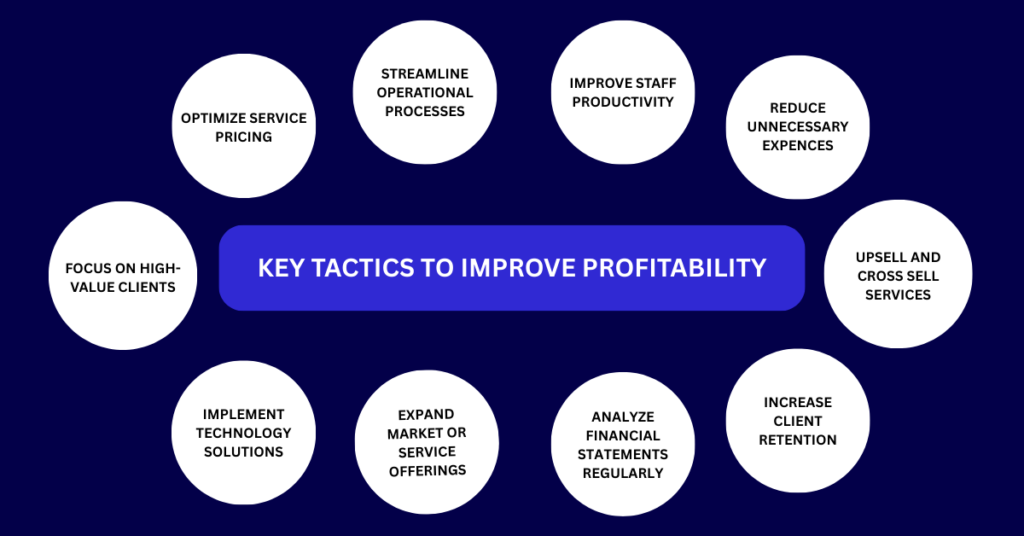
Improving profits requires a structured approach. Here’s a road map of the top 10 tactics that service businesses can implement immediately.
1. Optimize Service Pricing
- Conduct market research to understand competitor pricing.
- Use value-based pricing instead of cost-plus pricing.
- Offer bundled packages or tiered services to increase client spend.
- Test pricing changes with a small segment before full roll out.
2. Streamline Operational Processes
- Identify repetitive or low-value tasks that can be automated.
- Standardize workflows to reduce errors and training time.
- Track time spent per project to identify inefficiencies.
- Implement project management tools for smoother operations.
3. Improve Staff Productivity
- Define clear KPIs and measurable performance targets.
- Offer ongoing training and professional development.
- Introduce incentive programs for high performance.
- Use scheduling and collaboration tools to optimize staff time.
4. Reduce Unnecessary Expenses
- Audit monthly expenses to cut nonessential costs.
- Renegotiate vendor contracts and subscriptions.
- Implement energy-saving or resource-efficient practices.
- Focus on lean operations without compromising service quality.
5. Up sell and Cross-Sell Services
- Identify complementary services clients may need.
- Train staff to present up sell opportunities naturally.
- Offer seasonal or bundled packages to increase average transaction value.
- Monitor results and adjust offers based on client response.
6. Increase Client Retention
- Keep existing clients engaged through follow-ups and personalized services.
- Implement loyalty programs or subscription-based models.
- Collect feedback and act on it to improve client satisfaction.
- Retention-focused strategies cost less than acquiring new clients.
7. Analyze Financial Statements Regularly
- Monitor revenue, expenses, and profitability trends monthly.
- Use dashboards or accounting software for real-time insights.
- Focus on high-impact metrics like gross margin per service type.
- Make data-driven decisions for pricing, staffing, and service adjustments.
8. Expand Market or Service Offerings
- Identify under served markets or niches.
- Develop complementary services or packages.
- Collaborate with other businesses to reach new audiences.
- Test new offerings with pilot clients before a full-scale launch.
9. Implement Technology Solutions
- Adopt CRM systems to manage client relationships efficiently.
- Use scheduling software to reduce administrative time.
- Leverage accounting tools for accurate financial tracking.
- Automate repetitive tasks so staff can focus on high-value work.
10. Focus on High-Value Clients
- Segment clients based on profitability, repeat business, and growth potential.
- Allocate more resources to high-value clients for retention.
- Personalize services to deepen client relationships.
- Consider letting go of low-value clients to free up resources for profitable opportunities.
Step-by-Step Implementation Plan
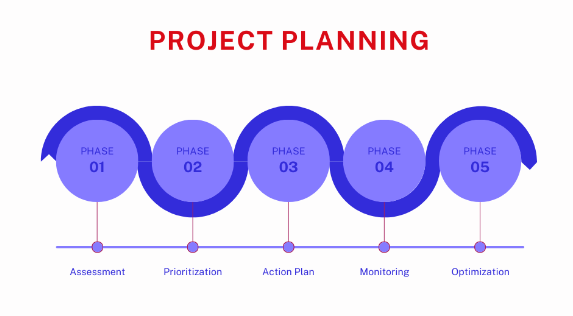
Implementing profit improvement tactics successfully requires a structured road map:
1. Assessment
- Review current revenue, costs, and client profitability.
- Identify high-cost processes, under performing services, and top-performing clients.
- Tools: Profitability dashboards, time-tracking software, and expense reports.
2. Prioritization
- Rank tactics by potential impact and ease of implementation.
- Focus on quick wins first, such as pricing optimization or reducing unnecessary expenses.
- Consider resource availability and staff readiness.
3. Action Plan
- Define specific tasks for each selected tactic.
- Assign responsibilities and deadlines.
- Document workflows and standard operating procedures (SOPs).
- Templates: Implementation checklist, staff training schedule, and client communication plan.
4. Monitoring
- Track KPIs such as gross margin, net profit, and client retention.
- Conduct weekly or monthly reviews to measure progress.
- Adjust strategies if results are below expectations.
5. Optimization
- Refine processes, pricing, and service offerings based on performance data.
- Introduce automation or technology solutions where needed.
- Reinforce staff engagement and recognize high performers to sustain results.
Real-World Examples
Practical examples demonstrate the effectiveness of these tactics:
- Marketing Agency Increased profitability by 18% through tiered service packages and cross-selling digital campaigns to existing clients.
- Cleaning Service Reduced operational costs by 12% by reorganizing routes, automating scheduling, and renegotiating supply contracts.
- Consulting Firm Improved client retention by 25% by implementing follow-up protocols, personalized reports, and loyalty programs for repeat clients.
These examples highlight measurable improvements achieved through systematic application of profit improvement strategies.
Common Pitfalls to Avoid
Even well-intentioned tactics can backfire. Avoid these mistakes:
- Over-Discounting Reduces revenue and devalues your services.
- Underestimating Cost Miscalculating labor or overhead can mask true profitability.
- Neglecting Staff Buy-In Employees need training and engagement for process changes to succeed.
- Over-Automation Technology should support, not replace, personal client interactions.
- Ignoring Data Decisions made without monitoring KPIs can lead to wasted effort and lost profits.
Conclusion
Profit improvement in service businesses is achievable with systematic planning, actionable tactics, and consistent monitoring. Start by implementing 1–2 high-impact strategies immediately and measure their effects. Over time, integrate additional tactics to maximize profitability.
Next Steps: Service business owners can leverage professional guidance, templates, and tools to accelerate results. Download our Profit Optimization Checklist or schedule a consultation with James Akpo to create a personalized profit improvement plan.
Related Articles / Resources
For further guidance, explore
- Pricing Strategies for Service Businesses Maximize revenue without losing clients.
- Marketing Optimization Boost ROI through targeted campaigns and client engagement.
- Financial Dashboards Track profitability and KPIs in real-time.
- AI Tools for Service Businesses Automate repetitive tasks and improve decision-making.
Consulting Resources by James Akpo Templates, guides, and case studies for service business growth