


In today’s fast-paced business environment, hiring the right consultant can make a significant difference between success and stagnation. Organizations often seek external expertise to navigate complex challenges, streamline processes, or achieve strategic goals. However, choosing the wrong consultant can lead to wasted resources, delayed projects, and missed opportunities. This guide is designed to help businesses understand how to select the right consultant to address their unique needs effectively.
Why Selecting the Right Consultant Matters
The decision to hire a consultant is not just a financial one; it is strategic. Consultants bring expertise, fresh perspectives, and objectivity that internal teams might lack. When a consultant aligns well with a company’s needs, the engagement can result in improved efficiency, increased profitability, and long-term growth. On the other hand, hiring a consultant without proper evaluation can lead to misaligned priorities, unclear objectives, and minimal impact on business outcomes.
Selecting the right consultant is akin to choosing a strategic partner. Their insights, methodologies, and advice will directly influence critical business decisions. Therefore, taking a structured, informed approach to consultant selection is essential.
Understanding Your Business Needs
Before evaluating consultants, businesses must first understand their own challenges and objectives. A clear understanding of organizational needs ensures that the consultant’s expertise aligns with the desired outcomes.
Define Clear Objectives
Every consulting engagement should start with well-defined objectives. Goals should be Specific, Measurable, Achievable, Relevant, and Time-bound (SMART). For example, a business may want to reduce operational inefficiencies by 15% in six months or implement a digital transformation plan within a year. Clear objectives provide direction and make it easier to evaluate the consultant’s effectiveness.
Identify Key Challenges
Understanding the core challenges that your organization faces is crucial. These challenges could range from operational inefficiencies, employee performance gaps, marketing strategy weaknesses, financial planning hurdles, or technology adoption barriers. Engaging multiple stakeholders across departments ensures a comprehensive view of issues that need resolution. Collecting this information upfront helps create a focused brief for potential consultants.
Types of Consultants and Their Expertise
Consultants come in many varieties, each with specialized knowledge and skill sets. Choosing a consultant whose expertise matches your needs is critical for success.
Industry Experience and Specialization
Consultants with industry-specific experience can offer insights that are directly relevant to your business. For instance, a consultant who has worked extensively in healthcare will understand compliance requirements, patient experience expectations, and operational challenges unique to that sector. When evaluating consultants, prioritize those with a proven track record in your industry.
Functional Expertise
Functional expertise refers to a consultant’s proficiency in specific business domains such as strategy, finance, marketing, human resources, or technology. A consultant specializing in digital transformation can provide guidance on software implementation, process automation, and IT strategy, while a financial consultant can optimize budgeting, forecasting, and investment strategies. Aligning the consultant’s functional strengths with your business priorities ensures tangible results.
Cost Considerations and Budget Alignment
While expertise is crucial, cost remains a key factor in consultant selection. Understanding pricing models and aligning them with your budget ensures value for money.
Understanding Pricing Models
Consultants typically charge hourly rates, project-based fees, or retainer arrangements. Hourly rates offer flexibility for short-term engagements, while project-based fees provide predictability for defined scopes. Retainers are ideal for ongoing advisory relationships. Businesses should weigh the pros and cons of each model relative to their objectives and budget.
Calculating ROI
Return on Investment (ROI) is not just about direct financial gains. Consider improvements in efficiency, time savings, risk mitigation, and enhanced decision-making. By estimating the value of these benefits, organizations can justify consultant fees and measure the engagement’s effectiveness post-project.
Red Flags and Warning Signs
Not every consultant is the right fit, and recognizing warning signs early can save time and money. Common red flags include unrealistic promises, lack of verifiable references, poor communication, inflexible methodologies, or a failure to understand your business context. Avoid rushing into contracts and perform thorough due diligence.
Making the Final Decision
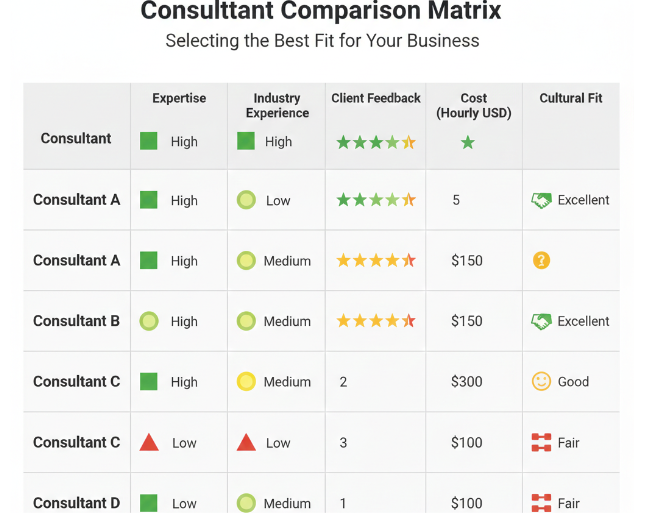
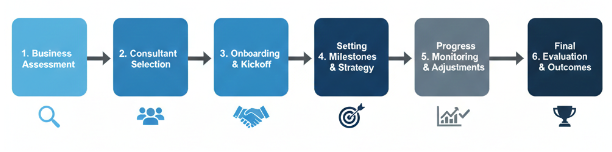
The final decision should be based on a combination of expertise, industry and functional fit, communication style, cost, and proven results. Once a consultant is selected, draft a clear engagement agreement that outlines objectives, scope, deliverables, timelines, and payment terms. Clear agreements prevent misunderstandings and provide a foundation for accountability.
Maintaining a Productive Consultant Relationship
Selecting the right consultant is only the first step. Maintaining a productive relationship is equally important. Clear communication, defined milestones, regular progress reviews, and open feedback channels foster collaboration. Treat the consultant as a strategic partner and provide them with the resources needed to succeed.
Measuring Success and Evaluating Impact
Evaluating the effectiveness of a consulting engagement ensures that objectives are met. Establish KPIs and metrics aligned with the initial goals. Metrics may include cost savings, revenue growth, process efficiency improvements, or employee productivity gains. Collect feedback from stakeholders and review outcomes against expectations. Lessons learned from each engagement can inform future consulting projects.
Frequently Asked Questions
How long should a consulting engagement last?
The duration depends on the scope and complexity of the project. Some engagements may last a few weeks, while large-scale strategic initiatives can span several months.
What if the consultant doesn’t meet expectations?
Clear agreements outlining deliverables and timelines provide a basis for accountability. Early feedback and adjustment discussions can correct course before issues escalate.
Can small businesses afford consultants?
Yes. Many consultants offer flexible pricing or short-term advisory packages suitable for small businesses. ROI often justifies the cost through improved efficiency and growth.
How do I manage multiple consultants?
Establish clear roles, responsibilities, and communication protocols. Assign a project lead internally to coordinate efforts and maintain alignment.
Conclusion
Choosing the right consultant requires careful evaluation of business needs, consultant expertise, industry experience, pricing, and cultural fit. By defining objectives, assessing candidates methodically, and maintaining productive relationships, organizations can maximize the value of consulting engagements. The right consultant acts as a strategic partner, driving efficiency, growth, and innovation. Investing time in selecting the right consultant today can yield substantial long-term benefits for your business tomorrow.