


In today’s competitive and information-driven world, simply being good at what you do is no longer enough. Every industry is crowded with professionals, companies, and brands offering similar services and solutions. What truly separates leaders from the rest is not only expertise, but influence. This is where thought leadership becomes important. Establishing thought leadership in your industry means becoming a trusted voice, someone people listen to, learn from, and respect when decisions are made.
Thought leadership is not about self-promotion or claiming to be an expert. It is about consistently sharing valuable insights, original thinking, and practical knowledge that helps others understand complex topics, solve problems, or see the future more clearly. When done correctly, thought leadership builds credibility, trust, and long-term authority that benefits both individuals and organizations.
This article explains in detail what thought leadership is, why it matters, and how you can establish yourself as a thought leader in your industry through strategy, content, engagement, and consistency.
What Is Thought Leadership and Why It Matters
Thought leadership is the ability to influence how people think about a topic, trend, or challenge within an industry. A thought leader is someone whose ideas are respected and referenced because they provide clarity, direction, and insight. These individuals do not simply follow trends; they explain them, challenge them, or redefine them.
The importance of thought leadership lies in trust. People naturally follow voices they trust. When your audience believes that you understand their problems and can guide them toward better outcomes, they begin to rely on your perspective. Over time, this trust turns into influence, loyalty, and opportunity.
In business, thought leadership helps brands stand out without aggressive selling. In professional careers, it helps individuals become visible and credible beyond their job titles. Thought leadership positions you as a guide rather than a promoter.
The Difference Between Expertise and Thought Leadership
Expertise means you have knowledge or skills in a specific area. Thought leadership goes beyond that. A thought leader not only understands a subject deeply but can also communicate insights in a way that shapes opinions and inspires action. Many experts exist in every industry, but only a few become thought leaders because they actively share their thinking and contribute to industry conversations.
Thought leadership requires perspective, not just information. It involves interpreting data, connecting ideas, and offering viewpoints that help others understand “why” something matters, not just “what” it is.
The Business Value of Thought Leadership
Thought leadership creates long-term value. Businesses that invest in thought leadership often see stronger brand credibility, better-quality leads, and increased trust from customers. People are more likely to work with companies they view as knowledgeable and forward-thinking.
For individuals, thought leadership opens doors to speaking opportunities, media mentions, partnerships, and career growth. It also allows professionals to move from being replaceable service providers to respected advisors.
Core Principles of Effective Thought Leadership
Successful thought leadership is built on a strong foundation. It is not accidental or random. Certain principles guide all effective thought leaders, regardless of industry.
Authenticity is the first principle. Audiences quickly recognize when content is forced or exaggerated. Thought leadership works best when ideas are genuine and based on real experience or research. Authentic voices feel human and relatable, which builds trust over time.
Another essential principle is value. Thought leadership content must help the audience in some way. It should answer questions, explain challenges, or offer new ways of thinking. If content does not provide value, it will not influence.
Consistency is equally important. Thought leadership is not built overnight. It requires regular contribution and presence. Consistent messaging and ongoing engagement help audiences remember and recognize your voice.
Original thinking separates thought leaders from content creators. Repeating common advice does not build authority. Thought leadership requires adding something new to the conversation, whether it is a unique perspective, a new framework, or a deeper explanation of existing ideas.
How to Identify and Clarify Your Thought Leadership Focus
One of the biggest mistakes people make when trying to establish thought leadership is trying to cover too many topics. Thought leadership requires focus. You must clearly define what you want to be known for.
This starts by identifying areas where your knowledge, experience, and interest overlap with real industry needs. Your focus should solve specific problems or answer important questions your audience cares about. A narrow focus allows you to go deeper and provide more meaningful insights.
Choosing a Topic Where You Can Lead
The best thought leadership topics are not necessarily the most popular ones. They are areas where you can add clarity or challenge existing thinking. Look for gaps in current conversations. Ask what people are confused about or what assumptions need questioning.
Your chosen topic should also be sustainable. Thought leadership requires long-term commitment, so the subject must be something you can explore deeply over time.
Understanding Your Target Audience and Their Challenges
Thought leadership exists for an audience. Without understanding who you are speaking to, your ideas may miss the mark. Research your audience’s challenges, language, goals, and frustrations. Pay attention to the questions they ask and the problems they face daily.
When your insights directly address these challenges, your content becomes relevant and impact.
Building the Foundation Knowledge, Research and Perspective
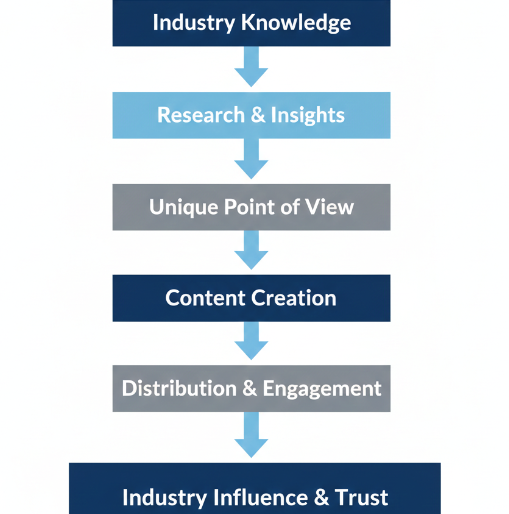
Thought leadership is built on strong knowledge. Staying informed about industry trends, emerging technologies, and changing customer behavior is essential. However, knowledge alone is not enough. Thought leaders interpret information and provide meaning.
Research plays a critical role here. This includes reading industry reports, analyzing data, studying competitors, and observing market behavior. Thought leaders synthesize information from multiple sources and turn it into clear insights.
Developing a Unique Point of View
A point of view is what differentiates a thought leader from a commentator. It reflects how you interpret trends and challenges differently from others. Developing a point of view requires asking deeper questions and being willing to take a stand on issues.
Your perspective should be supported by evidence and experience. It does not need to be controversial, but it should be thoughtful and intentional.
Content Strategies to Establish Thought Leadership
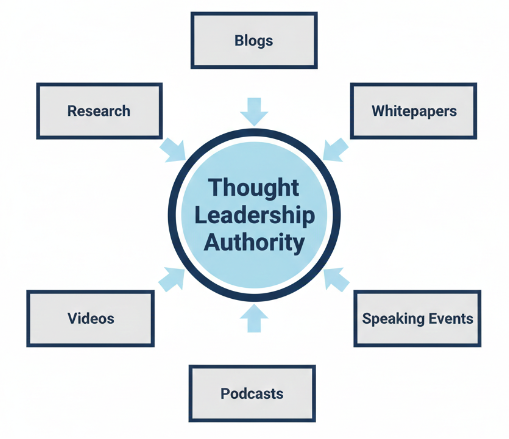
Content is the primary vehicle for thought leadership. Through content, ideas are shared, refined, and amplified. High-quality content demonstrates expertise and builds trust over time.
Long-form written content, such as articles and blogs, allows for detailed explanations and deeper exploration of topics. This type of content is especially effective for building authority and search visibility.
White papers and research-based content enhance credibility by showing depth and analytical thinking. These formats are particularly useful in industries where data and evidence matter.
Video and audio formats such as webinars, podcasts, and interviews allow audiences to connect with your ideas in a more personal way. These formats humanize thought leadership and expand reach to people who prefer visual or audio learning.
Books, e books, and formal publications further strengthen authority. They signal long-term commitment to ideas and often position the author as a serious industry voice.
Distribution and Promotion Getting Your Voice Heard
Creating content is only part of the process. Thought leadership requires visibility. Even the most valuable insights will have limited impact if they are not seen by the right audience.
Strategic distribution ensures your ideas reach decision-makers, professionals, and communities that matter. Search engines, social platforms, newsletters, and industry publications all play a role in amplification.
Social media platforms allow thought leaders to engage directly with audiences and participate in ongoing conversations. Sharing insights, responding to discussions, and contributing commentary increases visibility and credibility.
Speaking engagements and industry events provide opportunities to demonstrate thought leadership in real time. Public speaking builds authority quickly because it positions you as someone others want to learn from.
Media contributions such as guest articles and interviews further expand reach. Being featured on respected platforms reinforces credibility and exposes your ideas to new audiences.
Engagement and Community Building
Thought leadership is not a one-way broadcast. True influence comes from engagement. Responding to comments, participating in discussions, and acknowledging feedback strengthens relationships with your audience.
Building a community around ideas creates long-term loyalty. People who feel heard and valued are more likely to trust and advocate for your perspective.
Engagement also provides insight. Audience responses help refine ideas and identify new topics worth exploring.
Measuring and Optimizing Your Thought Leadership Impact
Thought leadership should be measured thoughtfully. While metrics like traffic and followers matter, deeper indicators such as engagement quality, speaking invitations, brand mentions, and strategic opportunities are more meaningful.
Tracking how your content influences conversations and decisions provides insight into its effectiveness. Continuous improvement ensures your thought leadership remains relevant and valuable.
Common Challenges and How to Overcome Them
Many aspiring thought leaders struggle with consistency, idea generation, or confidence. These challenges are normal. Overcoming them requires patience, discipline, and focus.
Fear of sharing opinions is common, but thoughtful perspectives supported by evidence build respect rather than criticism. Consistency can be achieved through planning and realistic publishing schedules.
Competition should not discourage you. Unique perspectives always find an audience over time.
Frequently Asked Questions About Becoming a Thought Leader
How long does it take to become recognized as a thought leader?
Thought leadership is a long-term process. It typically takes months or years of consistent contribution to gain recognition. The timeline depends on industry competitiveness, content quality, and audience engagement.
What types of content are most effective for thought leadership?
The most effective content is the format that best communicates your ideas and reaches your audience. Long-form articles, research-based content, and speaking engagements often have the strongest impact.
Is thought leadership the same as personal branding?
Thought leadership focuses on ideas and influence, while personal branding focuses on perception and identity. They overlap, but thought leadership is more about value than visibility.
How do I maintain credibility while promoting my ideas?
Credibility comes from honesty, evidence, and audience-first thinking. Avoid exaggerated claims and focus on education rather than promotion.
Conclusion Turning Thought Leadership into Influence and Opportunity
Establishing thought leadership in your industry is not about being loud or self-promotional. It is about being useful, consistent, and thoughtful. True thought leaders help others understand change, solve problems, and make better decisions.
By focusing on clarity, value, and authenticity, and by sharing insights through meaningful content and engagement, anyone can build influence over time. Thought leadership is a long-term investment, but the rewards are lasting trust, credibility, and opportunity.