


In today’s competitive business environment, companies constantly seek ways to improve operations, increase revenue, and maintain a competitive edge. One of the most effective ways organizations can achieve these objectives is through consulting services. Consultants bring specialized expertise, external perspectives, and proven methodologies that help businesses navigate complex challenges. However, potential clients often struggle to understand the tangible impact a consultant can deliver. This is where consulting case studies play a vital role.
Case studies showcase real-world transformations, illustrating how consulting projects translate ideas and strategies into measurable results. They provide prospective clients with clear evidence of a consultant’s ability to solve problems, drive growth, and implement change. Beyond marketing purposes, case studies serve as educational tools, offering insights into problem-solving approaches and industry-specific strategies.
This article explores the significance of consulting case studies, outlines how to structure them effectively, presents real-life transformation examples, and highlights lessons learned from consulting projects. We will also discuss how businesses can leverage case studies to make informed decisions when selecting a consulting partner.
Why Case Studies Matter in Consulting
Consulting services are often intangible, making it challenging for clients to evaluate potential value before engagement. Unlike products, where benefits are visible and measurable, consulting outcomes depend on implementation, change management, and continuous monitoring. Case studies bridge this gap by providing concrete examples of results.
Through case studies, businesses can assess a consultant’s methodologies, problem-solving skills, and success in similar industries. They demonstrate how specific challenges were addressed, what strategies were employed, and the measurable outcomes achieved.
Additionally, case studies help establish credibility and trust. Prospective clients can see that the consultant has delivered results consistently, reducing perceived risk. They also serve as internal learning tools for companies, offering insights into best practices and potential pitfalls during transformation projects.
How to Structure an Effective Consulting Case Study
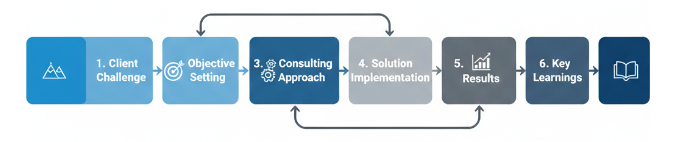
A consulting case study is more than just a success story. Its effectiveness lies in a structured approach that presents information clearly and logically. A well-structured case study typically includes:
- Introduction / Background: Describe the client’s industry, size, and operational context.
- Client Challenges: Highlight the business problems or bottlenecks the client faced.
- Objectives: Outline the goals set for the consulting engagement.
- Consulting Approach / Methodology: Explain the strategy, tools, and processes used to address the challenges.
- Solutions Implemented: Detail the specific actions, changes, or initiatives introduced.
- Results / Outcomes: Present quantifiable results, such as cost savings, revenue growth, or efficiency gains.
- Key Takeaways: Summarize insights, lessons learned, and recommendations.
By following this structure, case studies convey a complete narrative, allowing readers to understand both the journey and the results.
Understanding the Client’s Challenges
The first step in any consulting engagement is understanding the client’s challenges. These can range from operational inefficiencies to market expansion difficulties or revenue stagnation. Consultants perform detailed assessments, including stakeholder interviews, workflow analysis, and performance data review, to identify pain points accurately.
For example, a manufacturing client may struggle with prolonged production cycles, excessive waste, and delayed deliveries. A healthcare organization might face patient flow bottlenecks and inefficient resource allocation. Accurate diagnosis of these challenges is essential because solutions are only as effective as the problems they address.
Understanding the Client’s Challenges
The first step in any consulting engagement is understanding the client’s challenges. These can range from operational inefficiencies to market expansion difficulties or revenue stagnation. Consultants perform detailed assessments, including stakeholder interviews, workflow analysis, and performance data review, to identify pain points accurately.
For example, a manufacturing client may struggle with prolonged production cycles, excessive waste, and delayed deliveries. A healthcare organization might face patient flow bottlenecks and inefficient resource allocation. Accurate diagnosis of these challenges is essential because solutions are only as effective as the problems they address.
Setting Clear Objectives and Goals
After identifying challenges, consultants define SMART objectives—specific, measurable, achievable, relevant, and time-bound goals. Clear objectives align the consultant and client, ensuring all stakeholders have a shared understanding of success criteria.
Examples include increasing sales by 15% within six months, reducing operational costs by 10%, or improving customer satisfaction scores by a measurable margin. Setting quantifiable objectives allows consultants to track progress and demonstrate results, which forms the core of the case study narrative.
Showcasing Real Transformations
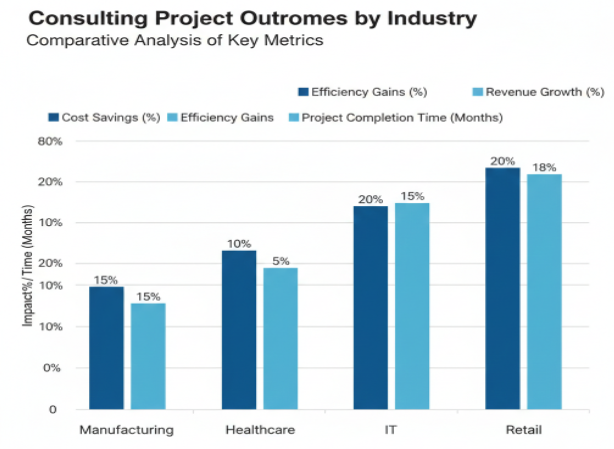
Consulting case studies become compelling when they demonstrate measurable transformations. Here are three illustrative examples across different industries:
Transformation Example 1 Operational Efficiency
A mid-sized manufacturing company faced production delays and high wastage rates, leading to missed deadlines and revenue loss. The consultant conducted a workflow analysis, identified bottlenecks in the supply chain, and introduced Lean management practices. By reorganizing production schedules, automating repetitive tasks, and training staff on efficiency principles, the company reduced waste by 20% and shortened delivery times by 15%.
Transformation Example 2 Digital Transformation
A healthcare provider struggled with patient scheduling, resulting in long wait times and administrative overload. The consulting team implemented an integrated digital platform for appointment management, resource allocation, and real-time reporting. Staff received hands-on training, and automated workflows replaced manual processes. Within three months, patient throughput increased by 25%, administrative costs dropped by 18%, and patient satisfaction scores improved significantly.
Transformation Example 3 Revenue Growth and Market Expansion
A retail chain wanted to expand into new geographic markets but lacked a clear strategy. The consultant conducted market research, competitor analysis, and consumer behavior studies. They developed a market entry plan, optimized the supply chain, and designed a targeted marketing campaign. Within six months, the retailer saw a 30% increase in sales and successfully established three new store locations.
Key Learnings from Consulting Transformations
Analyzing multiple case studies reveals patterns that contribute to successful transformations.
Common Success Factors
Successful consulting projects share several key factors: executive buy-in, clear KPIs, agile implementation, and continuous monitoring. When leadership supports change initiatives, teams are more engaged, and results are sustained. Clear KPIs provide a measurable framework for tracking progress and demonstrating impact. Agile implementation ensures solutions can adapt to real-world conditions, and ongoing monitoring guarantees continuous improvement.
Pitfalls to Avoid
Despite best efforts, some consulting projects fail due to unclear objectives, poor communication, insufficient stakeholder engagement, or unrealistic expectations. Case studies highlight these pitfalls and offer strategies to mitigate them, such as setting realistic timelines, aligning expectations early, and maintaining transparent reporting.
How to Leverage Case Studies for Your Business
Businesses can use consulting case studies to evaluate potential consultants and make informed decisions. Reading multiple case studies allows prospective clients to:
- Identify relevant experience and industry expertise.
- Assess the consultant’s ability to deliver measurable results.
- Understand the methodology and tools used.
- Learn from challenges faced and solutions applied.
Case studies also serve as internal benchmarks, helping organizations design their own transformation initiatives and anticipate potential challenges.
Frequently Asked Questions (FAQ)
What is a consulting case study?
A consulting case study is a detailed account of a consulting engagement that highlights challenges, strategies, solutions, and results.
How do I know if a consultant can deliver results?
case studies relevant to your industry and problem type, focusing on measurable outcomes and client testimonials.
Can case studies predict ROI?
While they cannot guarantee identical results, case studies provide a realistic indication of potential ROI based on similar contexts.
How detailed should a case study be?
A case study should include context, challenges, objectives, methodology, solutions, and measurable outcomes. Detail should be sufficient to understand the transformation journey.
How to verify the authenticity of a case study?
Check for client references, testimonials, and metrics provided. Credible consultants are transparent about results and willing to share verifiable information.
Conclusion
Consulting case studies are indispensable tools for demonstrating real-world transformations. They provide proof of a consultant’s capability, build trust with prospective clients, and offer actionable insights into methodologies and outcomes. By presenting challenges, objectives, approaches, solutions, and results in a structured manner, case studies showcase the tangible impact of consulting services.
Businesses can leverage these case studies to make informed decisions, select the right consultant, and apply lessons learned to internal improvement initiatives. Whether focusing on operational efficiency, digital transformation, or revenue growth, well-crafted case studies are a testament to the power of consulting in driving measurable change.