



Starting a business is exciting, but it is also one of the most challenging journeys a person can take. Every year, millions of startups are launched with big dreams, innovative ideas, and passionate founders. Yet, a large percentage of these startups fail within their first few years. While failure is often seen as part of the entrepreneurial journey, many startup failures are not caused by bad ideas. Instead, they happen because of common, avoidable mistakes.
Understanding these mistakes early can save founders time, money, and emotional stress. This article explores the most common startup mistakes, why they happen, and how entrepreneurs can avoid them. By learning from the experiences of others, founders can make smarter decisions and build stronger, more sustainable businesses.
Introduction
A startup is not just a small business. It is an experiment in uncertainty. Founders operate with limited resources, incomplete information, and constant pressure to grow. In such an environment, mistakes are almost inevitable. However, some mistakes appear repeatedly across industries, locations, and business models.
Many founders assume passion and hard work are enough to succeed. While these qualities are important, they are not sufficient on their own. Startups fail when founders ignore fundamentals such as market research, financial planning, customer needs, and team structure. The good news is that these mistakes are well documented, and learning about them early can significantly increase a startup’s chances of survival.
This article is designed to help entrepreneurs recognize the most common pitfalls and understand how to avoid them through thoughtful planning, continuous learning, and disciplined execution.
Lack of Market Research and Validation
One of the most common and costly startup mistakes is building a product without confirming that people actually want it. Many founders fall in love with their idea and assume others will feel the same way. Unfortunately, enthusiasm does not equal demand.
Market research helps founders understand who their customers are, what problems they face, and whether they are willing to pay for a solution. Without this knowledge, startups risk creating products that solve problems nobody cares about.
Market validation does not require expensive research firms. Founders can start by talking directly to potential customers, observing how they currently solve the problem, and testing small versions of the product. Early feedback helps refine the idea and reduce risk.

Ignoring the Power of Compounding
Small decisions made early in a startup’s life often have long-term effects. This is known as compounding. Ignoring compounding can quietly damage a business over time.
For example, failing to track expenses carefully might seem harmless at first, but over months, small overspending habits can drain a startup’s runway. Similarly, neglecting customer retention may not show immediate damage, but losing loyal users over time limits growth and increases marketing costs.
Successful founders understand that consistent, small improvements in product quality, customer experience, and operational efficiency add up. Paying attention to details early creates momentum that compounds into long-term success.
Scaling Too Early
Many founders believe that growth is the ultimate goal, so they rush to scale their business as quickly as possible. This is a dangerous mindset. Scaling before a startup has found product-market fit often leads to wasted money, operational chaos, and team burnout.
Early scaling mistakes include hiring too fast, expanding into new markets too soon, and spending heavily on marketing before the product is ready. When growth outpaces learning, startups lose control.
The right approach is to focus first on building a product that customers truly love. Once demand is consistent and repeatable, scaling becomes a strategic move rather than a risky gamble.
Financial Mismanagement
Poor financial management is one of the leading causes of startup failure. Many startups do not fail because they lack revenue, but because they run out of cash.
Founders often underestimate how long it will take to become profitable. They may also overspend on non-essential tools, offices, or marketing campaigns. Without clear budgeting and forecasting, it becomes impossible to make informed decisions.
Strong financial discipline includes understanding burn rate, managing runway, and planning for unexpected expenses. Startups that survive are usually those that treat cash as a limited resource and spend it intentionally.
Building the Wrong Team
A startup’s early team shapes its culture, speed, and long-term direction. Hiring the wrong people early can slow progress and create internal conflict.
Many founders make the mistake of hiring based solely on resumes or past experience. While experience matters, alignment with the startup’s vision and values is equally important. Early employees must be adaptable, motivated, and comfortable with uncertainty.
Another common mistake is trying to do everything alone. Founders who refuse to delegate often become bottlenecks. Building a balanced team with complementary skills allows the business to move faster and make better decisions.
Weak Business Model or No Clear Revenue Plan
Some startups focus heavily on product development but give little thought to how they will make money. This is a dangerous oversight.
A strong business model explains who pays, how much they pay, and why they choose your product over alternatives. Without clarity on revenue, growth becomes unsustainable.
Testing pricing early is essential. Founders should not assume customers will pay later. Early revenue, even at a small scale, provides valuable validation and helps guide future decisions.
Skipping Legal and Administrative Basics
Legal and administrative tasks may seem boring compared to building products, but ignoring them can create serious problems later.
Common mistakes include operating without proper contracts, failing to protect intellectual property, and not clearly defining ownership among founders. These issues often surface during fundraising or acquisitions, when it is too late to fix them easily.
Taking time early to establish legal foundations protects the startup and builds trust with investors and partners.
Misunderstanding Customer Needs
Some founders believe they know what customers want better than the customers themselves. This mindset often leads to products filled with features nobody uses.
Understanding customers requires continuous listening. This means gathering feedback, observing behavior, and adjusting based on real usage rather than assumptions.
It is also important to balance feedback. Catering too much to a small group of early users can limit broader appeal. Successful startups listen carefully while keeping a clear vision.
Weak Marketing and Poor Positioning
Even great products fail if people do not understand their value. Marketing is not just promotion; it is about communicating clearly who the product is for and why it matters.
Many startups struggle because they try to appeal to everyone. When messaging is vague, it fails to connect with anyone. Strong positioning focuses on a specific audience and problem.
Marketing should begin early, even before launch. Testing messaging, channels, and storytelling helps founders refine how they present their product to the world.
Inefficient Use of Technology and Processes
Startups often fall into two extremes with technology. Some overcomplicate their systems, while others rely on outdated tools that limit growth.
Choosing simple, reliable technology early allows startups to move quickly without creating technical debt. Efficient processes save time and reduce errors, especially as teams grow.
Technology should support the business, not distract from its core mission.
Psychological Mistakes Founders Make
Entrepreneurship is mentally demanding. Many founders underestimate the emotional challenges of building a startup.
Common psychological mistakes include comparing early progress to others’ success stories, fearing pivots, and ignoring burnout. These pressures can cloud judgment and lead to poor decisions.
Successful founders learn to manage stress, stay flexible, and accept that uncertainty is part of the process. Mental resilience is just as important as technical skills.
External Risks and Market Misjudgments
Some startups fail not because of internal mistakes, but because they misread the market. Overestimating market size, underestimating competition, or assuming first-mover advantage can be costly errors.
Markets are dynamic. New competitors emerge, customer preferences change, and regulations evolve. Founders must continuously monitor external conditions and adapt accordingly.
Being aware of these risks helps startups remain agile and responsive.
How to Avoid Startup Mistakes
Avoiding startup mistakes does not mean eliminating risk entirely. It means making informed decisions based on evidence rather than assumptions.
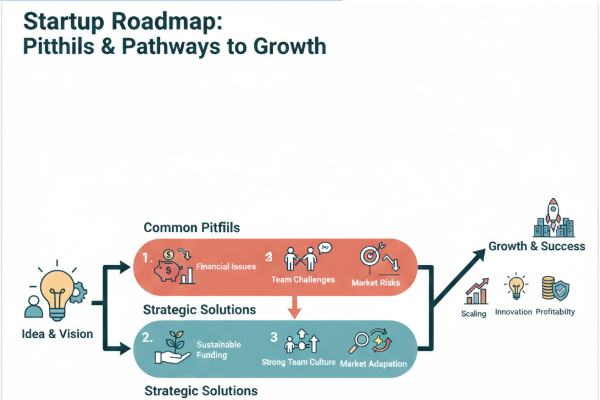
Founders should validate ideas early, manage finances carefully, build strong teams, and stay close to customers. Learning from mentors, advisors, and other founders accelerates growth and reduces blind spots.
Mistakes are inevitable, but repeated mistakes are optional.
Real-World Examples
Many successful companies today faced early challenges that could have destroyed them. Some pivoted after discovering weak demand. Others survived by cutting costs and refocusing their strategy.
These stories show that mistakes do not define a startup’s future. How founders respond to mistakes matters more than the mistakes themselves.
Frequently Asked Questions (FAQs)
What is the most common reason startups fail?
The most common reason startups fail is lack of market demand. Many businesses build products without validating that customers actually need or want them.
How early should market validation be done?
Market validation should be done as early as possible, even before building the full product. Early conversations with potential customers can save months of wasted effort.
Is running out of money always the founder’s fault?
Not always, but poor financial planning is often a major factor. Unexpected events happen, but disciplined budgeting and forecasting reduce financial risk.
Can a startup recover from early mistakes?
Yes. Many successful startups made serious early mistakes but recovered by learning quickly, pivoting, and improving execution.
How important is having the right team early on?
Extremely important. Early team members influence culture, productivity, and long-term success. The wrong hires can slow progress significantly.
Conclusion
Startup success is not about avoiding all mistakes. It is about recognizing common pitfalls and responding wisely when challenges arise. Most startup failures are preventable, not because founders lack talent, but because they overlook fundamentals.
By understanding market needs, managing finances carefully, building strong teams, and staying adaptable, founders can dramatically improve their chances of success. Entrepreneurship is a journey of learning, and those who learn fastest often go the furthest.
With the right mindset and preparation, mistakes become lessons, and lessons become stepping stones toward building a successful and sustainable business.